When Do You Need a Pilot Car for an Oversize Load?
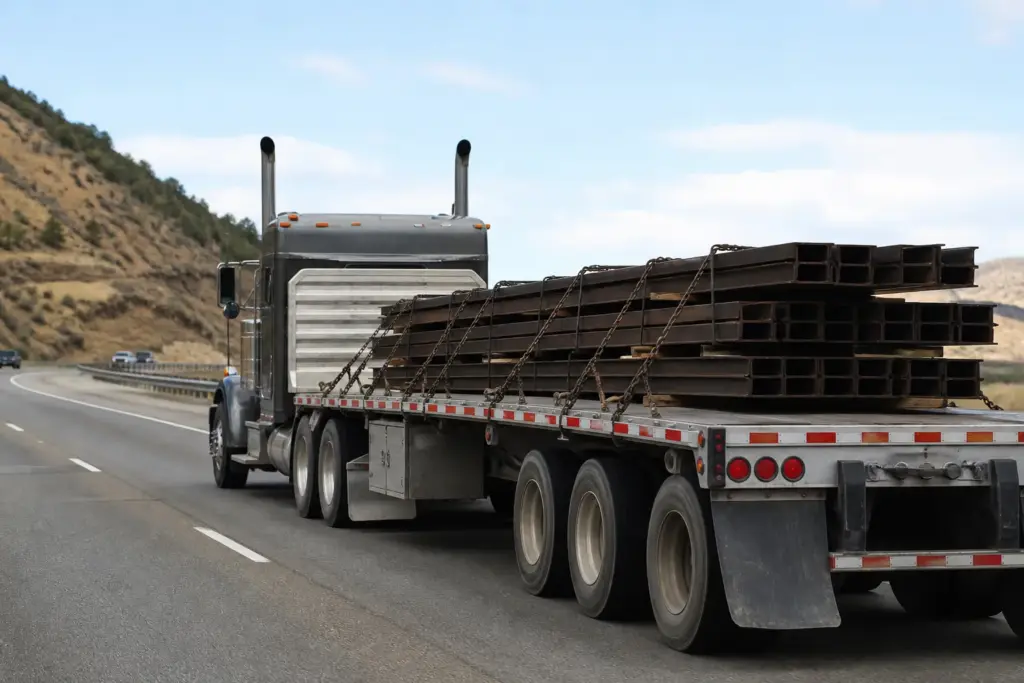
If you move equipment that sticks out past legal width, height, or length, you will hear the same question early in planning: do you need a pilot car? Sometimes called an escort vehicle or oversize escort, a pilot car is the marked lead or chase vehicle that warns other drivers, watches clearances, and helps keep your permitted load legal on the road.
Here is the short answer most shippers need: there is no single federal rule that tells every state when a pilot car is required. The Federal Highway Administration (FHWA) is clear that the federal government does not issue oversize/overweight permits—states do. Escort thresholds, equipment rules, travel hours, and certification all come from the states on your route (and sometimes cities or counties for local delivery).
That means the right question is not “When does the U.S. require a pilot car?” It is “What does each state on this route require for these dimensions, on these road types?”
At Oversize Load Transport, we help shippers sort that out before the truck rolls—so you are not guessing at escort counts the morning of pickup.
What an Oversize Load Pilot Car Actually Does
A pilot car is not decoration. On a compliant move, escort operators typically:
- Warn approaching traffic with signs, lights, and flags
- Position ahead of the load on two-lane roads (or behind on multi-lane roads) when the permit requires it
- Maintain two-way radio contact with the truck
- For tall loads, run a height pole (vertical clearance indicator) so the driver can stop before a low bridge or wire
- Help manage turns, lane encroachment, and temporary traffic control when allowed by state law
If your load is only slightly over legal size, you may need permits and flags—but not an escort. Cross the state’s dimensional trigger, and one or more pilot cars become mandatory. Miss that requirement and you risk delays, citations, or a denied move at the scale or checkpoint.
Federal Baseline vs. State Escort Rules
FHWA publishes federal size and weight frameworks for the Interstate system and maintains state permit contact lists. For escorts, the practical takeaway is simple:
- Federal: Does not issue OS/OW permits; does not set a national “pilot car required at X feet” rule for every highway. See FHWA’s Oversize/Overweight Load Permits page.
- States: Issue permits, set escort thresholds, decide how many escorts, where they run (front/rear), and what equipment/training they need.
Legal width on the National Network is commonly 8 feet 6 inches (102 inches). Once you exceed a state’s legal limits for width, height, length, or overhang, you enter permit territory. Pilot car requirements kick in at higher thresholds that vary by stateand often by whether you are on a two-lane highway or a multi-lane divided route.
Anything below that is not a hard federal escort rule should be treated as state-specific. Always read the permit and the state’s current movement conditions.
Verified Example: Florida Pilot Car Requirements
Florida publishes detailed escort rules in Fla. Admin. Code R. 14-26.012. These are useful if you originate in or travel through Florida (including Sebastian and the Treasure Coast). Key verified triggers include:
Width (Florida)
| Dimension (approx.) | Escort requirement (summary) |
|---|---|
| Over 12 ft up to 14 ft | Minimum one qualified escort |
| Over 14 ft up to 16 ft | Two qualified escorts (front and rear) |
| Over 16 ft | Stricter rules; often law-enforcement escorts depending on roadway type; typically limited to local moves |
On some narrow or high-ADT roads, Florida can require two escorts even in the 12–14 ft width band unless the load carries the extra lighting the rule describes. Placement also matters: one escort usually leads on two-lane highways and follows on four-lane divided highways; over-length-only moves put the escort at the rear.
Height (Florida)
| Height | Escort requirement (summary) |
|---|---|
| Over 14 ft 6 in up to 16 ft | Qualified escort with a vertical height indicator ahead of the load |
| Over 16 ft | Qualified escort with height indicator plus law-enforcement escort; utility coordination often required; local-move restrictions apply |
Length (Florida)
| Length | Escort requirement (summary) |
|---|---|
| Over 95 ft | One qualified escort |
| Over 150 ft | Two qualified escorts (one on limited-access facilities in many cases) |
| Over 250 ft | Law-enforcement escort plus a qualified escort |
Florida also defines who may escort (qualified escorts, certain out-of-state qualifications, or law enforcement), vehicle weight bands for escort units, OVERSIZE LOAD” signing, amber warning lights, radios, paddles, cones, and more. Those details belong on the permit packet—not in a one-size-fits-all blog rule.
Verified Example: Texas Escort Flag Vehicle Thresholds
Texas Department of Motor Vehicles (TxDMV) publishes escort flag vehicle requirements that differ from Florida in important ways—especially height and length triggers. For most general oversize permits (manufactured housing has its own table), TxDMV lists:
Width (Texas)
| Width | Escorts |
|---|---|
| Exceeding 14 ft to 16 ft | One escort: front on two-lane highways; rear on multi-lane highways |
| Exceeding 16 ft | Front and rear on all roads |
Height (Texas)
| Height | Escorts |
|---|---|
| Exceeding 17 ft | One front escort with height pole |
| Exceeding 18 ft | Front and rear; front must have height pole |
Length & overhang (Texas)
| Dimension | Escorts |
|---|---|
| Exceeding 110 ft to 125 ft | One front (two-lane) or one rear (multi-lane) |
| Exceeding 125 ft | Front and rear on all roads |
| Front or rear overhang exceeding 20 ft | One rear escort on all roads |
Texas also notes that if a load exceeds escort triggers in two dimensions, you generally need front and rear escorts. Escort vehicles must meet equipment rules (lights, signs reading “OVERSIZE LOAD or “WIDE LOAD,” two-way radio, etc.). Height poles are required for the front escort when height exceeds 17 feet.
Compare Florida’s height-pole escort starting above 14’6″ with Texas starting above 17′—same freight, different state math. That is why multi-state planning cannot rely on one chart.
What Usually Varies by State (Do Not Assume)
Industry roundups often say escorts commonly appear around 12 feet wide, with two escorts more common near 14 feet, and height escorts when loads climb past roughly 1415 feet. Treat those as patterns, not law.
State-varies (verify every time):
- Exact width/height/length/overhang triggers
- Whether road type (two-lane vs. multi-lane) changes escort count or position
- When a police / law-enforcement escort is required instead of (or in addition to) a civilian pilot car
- Daylight-only, holiday, and peak-hour blackouts
- Escort vehicle weight limits and mandatory gear
- Whether the pilot/escort operator needs state certification (PEVO) and whether another states card is accepted
As of recent industry summaries, roughly a dozen-plus states require some form of pilot/escort operator certification or flagger training. Reciprocity exists among some states and not others. Never invent a certification list for a route—confirm against the permit instructions for each jurisdiction.
How to Decide If Your Load Needs a Pilot Car
Use this practical sequence before you book trucks or cut purchase orders:
- Measure the loaded unit, not the brochure. Include mirrors, buckets, wings, boom tips, and cribbing that stay on for transport.
- List every state (and major local jurisdictions) on the candidate routes.
- Pull current OS/OW rules or call permitting for each state. Confirm escort counts for width, height, length, and overhang separately—then combine them the way that state does.
- Check road type. A load that needs one rear escort on an Interstate may need a front escort on a two-lane connector.
- Budget for escorts early. Pilot cars are a line item; so are potential LE escorts, route surveys, and utility lifts for high loads.
- Match escorts to the permit. Operators need the permit copy, radio plan, and clear meeting points. Wrong gear or an unqualified escort can stop a legal truck.
If you are shipping excavators, transformers, modular sections, tanks, or plant equipment, dimensions alone do not tell the whole story—trailer choice and how the load sits on the deck can push you over an escort line even when the cargo “feels” standard.
Common Situations Where Escorts Surprise Shippers
- Width creep: Attachments or rotating houses push a 11’6″ machine past 12′ once loaded—triggering Floridas one-escort band (or another state’s equivalent).
- Height under wires: A load under 14’6″ may not need a Florida height escort; add a few inches of blocking or a taller trailer and you suddenly need a height-pole lead car.
- Long combinations: Stretch decks and jeep/dolly setups grow overall length fast. Floridas 95′ length escort and Texas’s 110′ length escort are easy to hit on multi-piece heavy haul.
- Multi-state stacking: You plan for Texas’s 14’+ width escort, then discover an earlier state requires escorts at a lower widthso the full corridor needs escorts from mile one.
- Night or holiday moves: Some states allow night travel only with law-enforcement escorts or extra lighting. Escort count is not just a daylight table.
Planning Escorts Without the Headache
You do not have to memorize every state’s FAC or TxDMV table. You do need a broker/coordinator who:
- Collects accurate dimensions and weight
- Builds a route that balances miles, permits, and escort cost
- Arranges qualified pilot cars (and LE escorts when required)
- Aligns travel windows with permit conditions
- Keeps communication tight between driver, escorts, and shipper
That is the day-to-day work behind oversize and heavy haul coordination through Logi Transports LLC (Sebastian, FL — MC-1636889 / USDOT 4230991).
Get a Clear Escort Plan With Your Quote
If you are asking “When do I need a pilot car for this oversize load?” the fastest way to a reliable answer is a dimensioned quote request—not a generic yes/no.
Call (864) 791-5644, email quotes@logitransports.com, or submit the quote request form. Share origin, destination, loaded dimensions, weight, and timing. We will outline permits, routing, and escort needs so you know what the move actually requires before it leaves the yard.
Bottom line: Pilot cars are a state permit condition, not a federal checkbox. Use verified state thresholds (like Florida’s and Texas’s above), treat every other jurisdiction as state-varies until confirmed, and build escorts into the plan early. That keeps freight movingand keeps expensive surprises off your invoice.