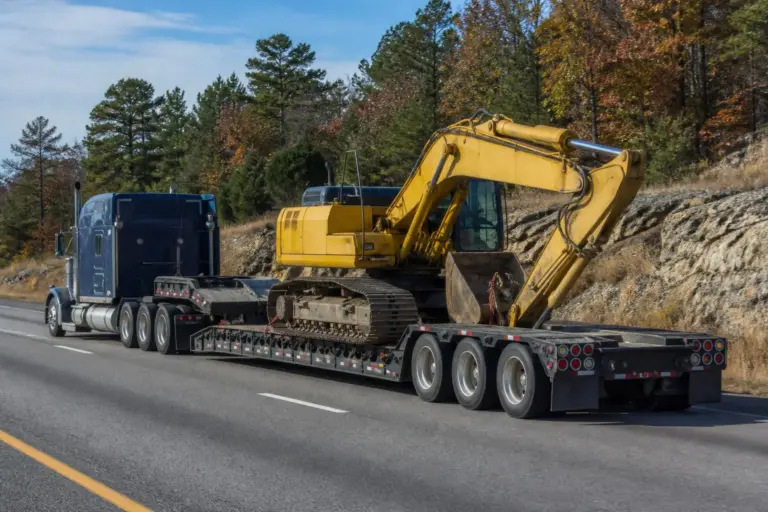
How to Measure an Oversize Load for a Permit Quote
Most oversize delays start with a tape measure—not a truck. Shippers send brochure height, forget a bucket wing, or skip axle spacings, and the permit office (or the scale) rejects what looked fine on paper. If you want a usable quote and a legal move, you have to measure the loaded configuration the way permitting systems expect it.
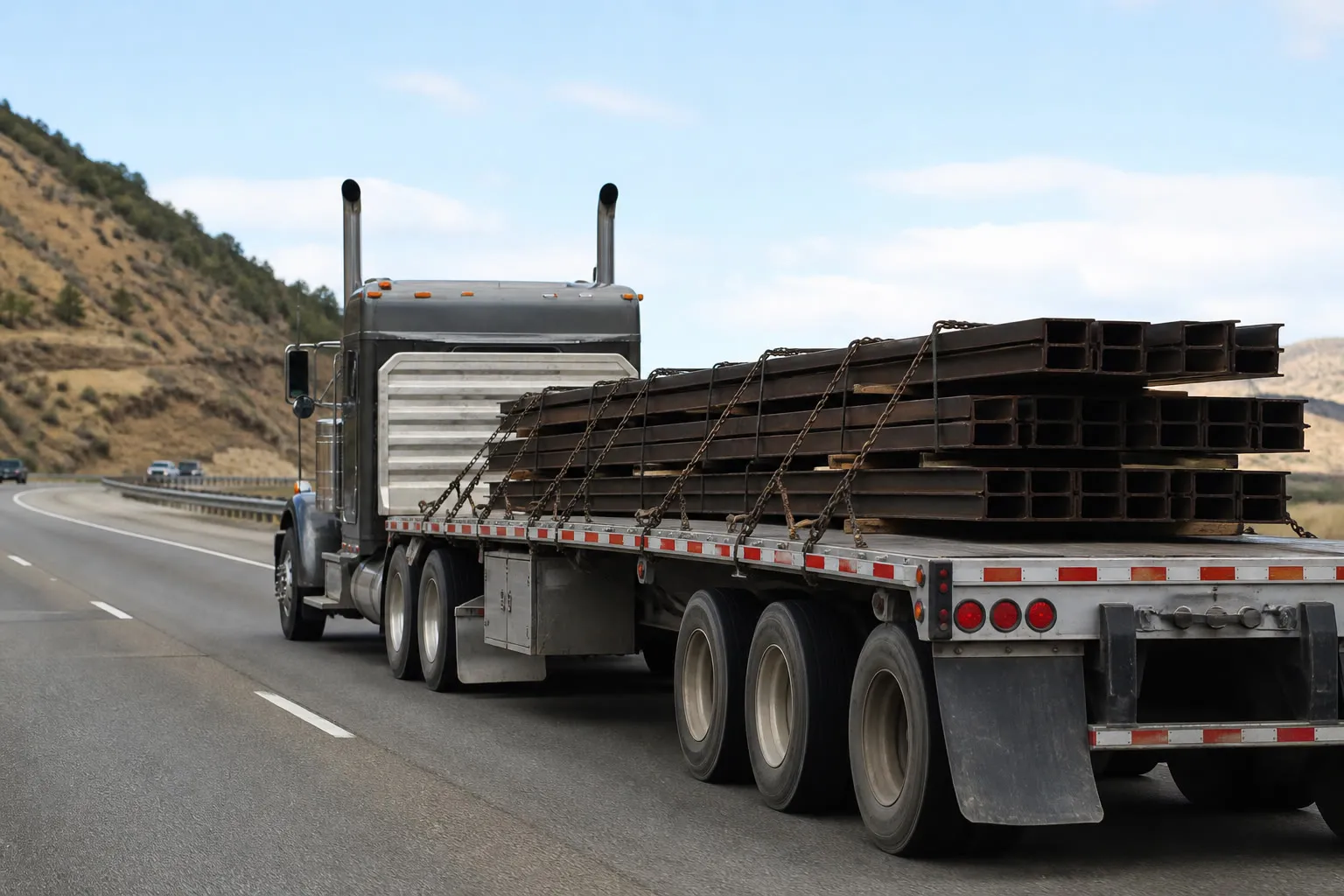
This Guide explains how to measure an oversize load for a permit: overall height, width, and length; front and rear overhang; gross weight and axle data; and when a route survey letter becomes mandatory. It uses verified Florida and Texas application fields plus the federal baseline from FHWA—so you can hand your broker numbers that actually route.
If you are still sorting escorts or travel windows after dimensions are locked, see our Guides on when you need a pilot car and daylight, holiday, and blackout rules. Trailer choice changes the loaded profile too—compare RGN vs step-deck before you call the numbers final.
Federal Baseline: States Issue Permits, Numbers Drive Everything
The Federal Highway Administration (FHWA) is explicit: the federal government does not issue oversize/overweight permits. States do. FHWA does publish Interstate weight frameworks that matter when you are planning overweight moves:
- 80,000 pounds gross vehicle weight (Interstate framework)
- 20,000 pounds single axle
- 34,000 pounds tandem axle
- The Federal Bridge Formula for groups of two or more consecutive axles (axle spacing is not optional math)
States may permit nondivisible oversize/overweight loads beyond those baselines. Your job as a shipper is not to memorize every state table—it is to give accurate loaded dimensions and weight so each state’s system can apply the right rules. Bad inches become wrong escorts, wrong travel hours, and wrong routes.
Measure the Loaded Unit—Not the Brochure
Catalog specs describe the machine in a yard, often with attachments removed and the boom tucked for the photo. Permits describe what rolls on the highway:
- Include attachments that stay on for transport (buckets, blades, rippers, counterweights if not removed)
- Include cribbing, dunnage, tarps, and chains that add height or width
- Include the trailer deck height when you report overall height from pavement
- Include truck, trailer, and overhang when you report overall length
If the excavator is 11′6″ wide in the brochure but the house and bucket push past 12′ once loaded, Florida escort math (and many other states) can flip. Measure what leaves the gate.
Overall Height: Pavement to Highest Point
Overall height is almost always measured from the pavement (or roadway surface) to the highest point of the vehicle and/or load. That includes exhaust stacks, boom tips, antennas, and anything sticking above the machine.
Florida’s oversize/overweight permit application (Form fields summarized in FDOT materials and Fla. Admin. Code R. 14-26.00411) asks for total height of the vehicle and/or load from the pavement to the highest point. Texas TxDMV materials for TxPROS likewise require overall load height as part of complete load dimensions.
Practical tips:
- Measure after the machine is on the chosen trailer—deck height changes the answer
- An RGN often lowers overall height versus a step-deck for the same machine
- Round carefully; do not “shave” an inch to stay under a permit band—enforcement measures what is there
Florida also puts height survey duties on the hauler for clearance verification (details below). Tall loads are where brochure optimism dies first.
Overall Width: Widest Point of Truck, Trailer, or Load
Overall width is the widest point of the combination—mirrors usually follow state guidance, but wings, house swing, outriggers left extended, and side-mounted attachments count when they travel with the load.
Florida’s rule language calls for total width of vehicle and/or load at the widest point. Texas applications ask for maximum width as part of the complete load description. Legal width on the National Network is commonly 8 feet 6 inches (102 inches); anything beyond that enters permit territory in most jurisdictions, with escort triggers stacking higher.
Watch for width creep:
- Rotating houses and offset loads
- Buckets or booms that hang outside the tracks
- Side boards, stake pockets, or securing gear that adds inches
Width is also what often decides pilot-car counts. Lock width before you lock escort budget.
Overall Length and Overhang
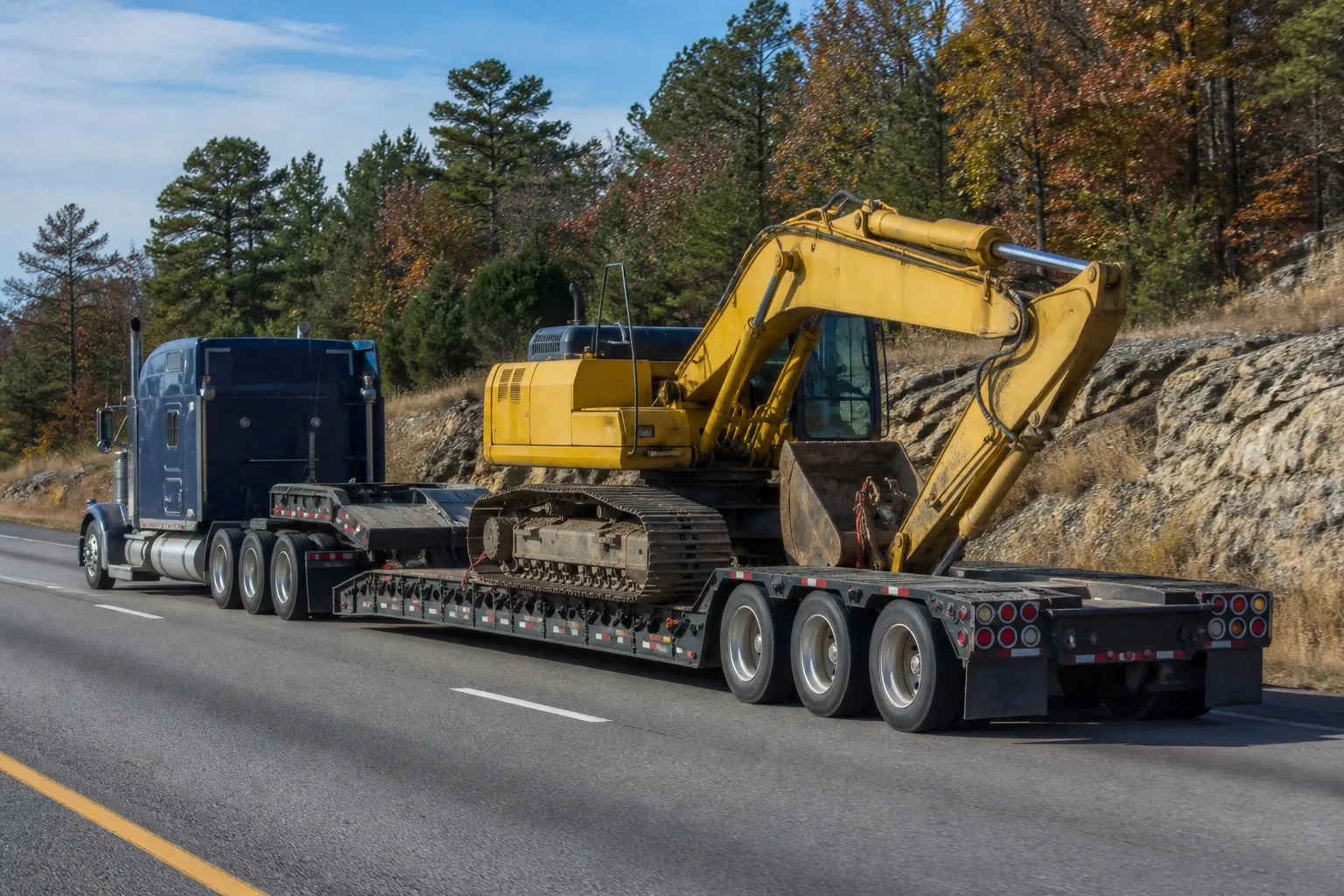
Overall length is typically the full combination from the foremost point to the rearmost point—truck, trailer, load, and overhang included. Florida’s application fields ask for total length of the vehicle/vehicle combination and/or load from front to rear including front and rear overhang, with overhang listed separately when present. FDOT’s trip application form also captures trailer length, kingpin setting, front overhang, and rear overhang as distinct fields.
Texas TxDMV guidance for permit readiness likewise lists total length including truck, trailer, and any overhang. Texas equipment notes commonly treat overhang as part of permitted length (with separate escort triggers when overhang is large—for example, industry TxDMV summaries cite rear escort needs when overhang exceeds 20 feet on many general permits).
Measure both:
- Overall combination length
- Front overhang and rear overhang as separate numbers
Long stretch decks, jeep/dolly setups, and beam or modular pieces grow length fast. Length bands drive escorts and sometimes travel windows—see our pilot car Guide for Florida and Texas length examples.
Weight: Gross Weight Is Not Enough for Overweight Permits
If the move is oversize-only and legal weight, many applications still ask you to confirm legal weight. Once you are overweight—or close—you need axle-level data.
FHWA Interstate framework reminder: 80,000 lb GVW, 20,000 lb single, 34,000 lb tandem, plus bridge formula based on axle spacing. States can permit nondivisible loads above those limits, but they still need a truthful axle sketch.
Florida overweight applications (FDOT oversized/overweight permit application) collect:
- Total gross weight
- Total number of axles
- Total outerbridge (sum of axle spacings)
- Per-axle weights and center-to-center spacings
- Tire information when required (including self-propelled units)
- Transverse axle spacings for dual-lane loading or very heavy axles
Texas overweight applications under 43 Tex. Admin. Code § 219.11 require, at minimum for overweight work: number of axles, distance between axles, axle weights, number of tires, and tire size. TxDMV’s Motor Carrier Handbook tells applicants to have overall dimensions, gross weight, axle spacings, axle weights, and tire size ready before applying through TxPROS.
Texas also publishes axle-group permit weight caps (tire width rules can lower them further)—for example, published group maxima such as 25,000 lb single, 46,000 lb two-axle group, 60,000 lb three-axle group, with spacing rules that reduce allowable weight when groups are too close. You do not need to engineer the permit yourself, but you do need accurate spacings and weights so the carrier and permit desk can.
Shipper takeaway: “About 90,000 pounds” is not a permit number. Ask for a scale ticket or a carrier axle estimate tied to the actual trailer configuration.
Verified Florida Extra: Route Survey Letters for Clearance
Florida draws a bright line in Rule 14-26.00411: the Department verifies load-carrying capacity of the route (bridges and similar structures). The applicant is responsible for verifying adequate vertical and horizontal clearances. No movement under the permit until the route has been surveyed to confirm it can accommodate the vehicle and load.
Key verified points from the rule:
- A survey letter must be maintained with the load and produced to law enforcement and weight inspectors on request
- The letter must be on the hauler’s letterhead with a signed statement that the route was surveyed and clearances exceed the requested permitted dimension by a minimum of 6 inches for height greater than 15 feet and 2 feet on each side for width greater than 16 feet
- The surveyed route must match the route on the permit
- Applications for height greater than 18 feet and/or width greater than 22 feet shall be supported by a survey letter from the hauler
- Surveying does not replace the permit—you still need both
If your quote assumes a 15′6″ loaded height through Florida without survey planning, build that into schedule and cost early.
Verified Texas Extra: TxPROS Wants Complete Load Dimensions Up Front
Texas routes most OS/OW permitting through TxPROS (Texas Permitting & Routing Optimization System). TxDMV’s handbook checklist for faster processing includes:
- Complete load description
- Truck and trailer identifiers (year/make, VIN, plate, state)
- Overall width, height, and total length (including overhang)
- Gross weight plus axle spacings, axle weights, and tire size when overweight
- Exact origin/destination on the state system and requested start date for applicable permit types
- Valid USDOT number (carriers under OOS orders get blocked)
Small dimension errors in TxPROS create big operational failures: rejected routes, wrong self-issue outcomes, or roadside mismatches. Measure once, enter once, move once.
What to Send for a Quote That Survives Permitting
Use this checklist when you request heavy equipment hauling or any oversize/overweight move:
- Origin and destination with site access notes (low wires, tight gates, dirt vs paved)
- Loaded overall height, width, and length in feet and inches
- Front and rear overhang if any
- Gross weight and, for overweight, axle counts, axle weights, and center-to-center spacings
- Photos from front, side, and rear—attachments visible
- Ready date and any hard delivery deadline (travel restrictions can eat days)
- Preferred trailer notes only if the site forces them (crane-only loading, low door, etc.)
More on coordination basics sits in our permits and escorts overview. Dimensions decide almost every line item that follows.
Common Measuring Mistakes That Blow Up OS/OW Moves
- Brochure height + wrong trailer: Adding a taller deck pushes you into a new escort or survey band
- Width without attachments: The “legal-ish” machine becomes a 12′+ permit load at the last minute
- Length without overhang: Pilot-car and holiday rules can change when overhang is added to overall length
- Gross weight only: Overweight permits need axle math; bridge analysis fails without spacings
- Assuming one state’s form equals another’s: Florida survey letters and Texas TxPROS fields are different workflows for the same freight
Fix the tape measure before you fight the calendar.
How Logi Transports Uses Your Numbers
At Oversize Load Transport, Logi Transports LLC (Sebastian, FL — MC-1636889 / USDOT 4230991) builds quotes from loaded dimensions, weight, and timing—not guesswork. Accurate measurements let us align trailer choice, permits and escorts, and legal travel hours before the truck is booked.
Call (864) 791-5644, email quotes@logitransports.com, use our contact form, or submit the Logi Transports quote request with your measured specs and photos.
Bottom line: Knowing how to measure an oversize load for a permit means reporting loaded overall height (pavement to top), width at the widest point, length including overhang, and—when overweight—axle weights and spacings. FHWA does not issue the permit; Florida and Texas (and every other state on the route) will. Measure the combination that actually rolls, and your quote stays honest from first call to delivery.