Oversize Load Height Limits: Height Poles, Route Surveys & Permit Bands
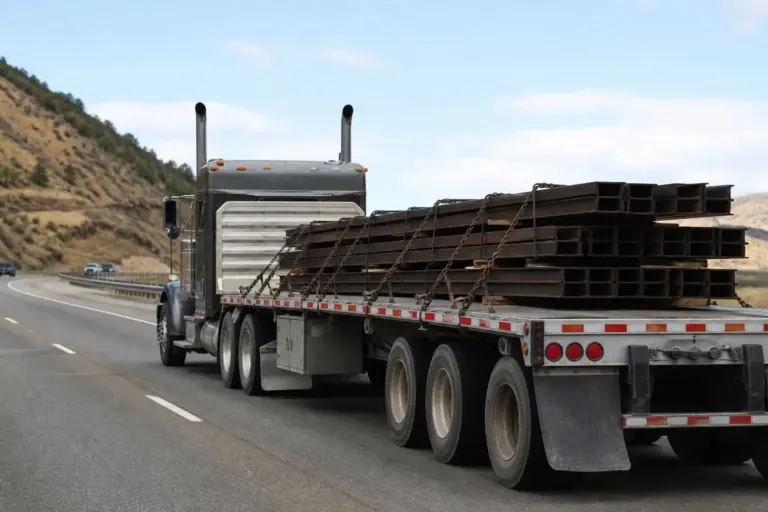
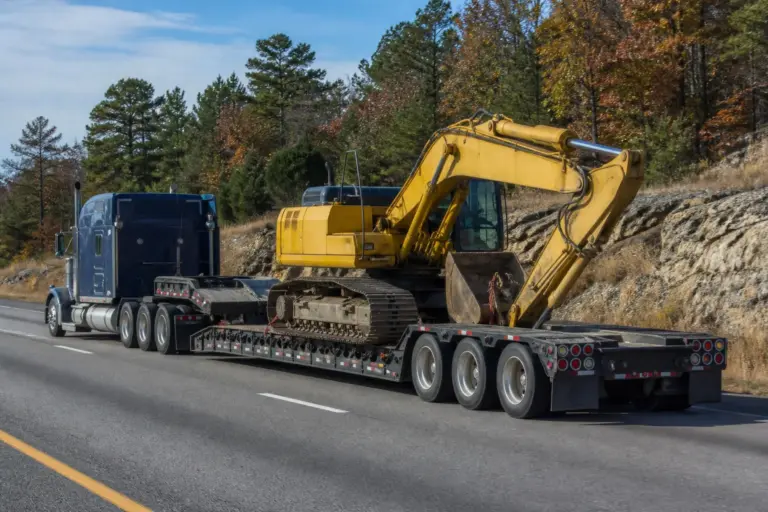
Width gets most of the attention in oversize trucking, but height is the dimension that does the most expensive damage. A load that’s a few inches too tall can strike a bridge beam, rip down a traffic signal, or snag a power line. Before any of that, it can get a permit rejected or a route rerouted at the last minute. Knowing the oversize load height limit in each state on your route, and what changes as the load gets taller, is how you avoid paying for a move twice.
This Guide covers where legal height actually comes from, how Florida and Texas step up their requirements as height climbs, what a height pole escort and a route survey do, and the trailer and measuring choices that can keep a load under the next threshold.
There is no federal height limit
Unlike width, height isn’t set in Washington. According to FHWA’s size and weight overview, no federal vehicle height limit is imposed, and state standards range from 13.6 feet to 14.6 feet. Width is different: on the National Network, states must allow 102 inches (8 feet 6 inches), no more and no less. That split matters because a load can be perfectly legal on width and still need a permit in one state but not the next, purely because of height.
Two state examples show the spread:
| State | Legal height (no permit) | Source |
|---|---|---|
| Florida | 13 ft 6 in, including the load (auto transporters up to 14 ft) | Florida Statute 316.515 |
| Texas | 14 ft, including the load | Texas Transportation Code 621.207 |
Texas adds a useful warning in the same statute: the operator of any vehicle taller than 13 feet 6 inches must make sure it clears every structure on its path, and the owner is strictly liable for damage to a bridge, underpass, or similar structure. In other words, being legal on paper isn’t the same as clearing every overpass. If you’re not sure what counts as an oversize load in the first place, our oversize load FAQ covers the basics.
How requirements step up as height climbs
Once a load is over legal height, states don’t treat every inch the same. They set bands, and each band adds conditions. Florida spells its bands out in Florida Administrative Code Rule 14-26.012:
| Florida load height | What the permit requires |
|---|---|
| Up to 14 ft 6 in | Trip or multi-trip permit; movement allowed all days and all hours |
| Over 14 ft 6 in up to 16 ft | Daytime only, no holidays; flags, signs, and at least two warning lights; an escort with a vertical height indicator leads the load |
| Over 16 ft | Daytime only, no holidays; flags, signs, and two warning lights; local moves only; a law enforcement escort plus a qualified escort with a height indicator; utility crews wherever the load meets low wires, signals, or structures. Multi-trip permits stop at 18 ft |
| Over 18 ft | Everything above, plus an affidavit that the route clears the requested height plus 6 inches |
Texas uses different break points. Under 43 Texas Administrative Code 219.11, unless TxDOT grants an exception based on a route and traffic study, an overheight load needs:
- A front escort with a height pole for any permitted vehicle over 17 feet tall.
- Both a front and a rear escort for any permitted vehicle over 18 feet tall.
- For a load 19 feet or taller, TxDOT furnishes a proposed route, and the applicant has to physically inspect it and tell the department in writing whether the load can make it.
Put those side by side and you can see why multi-state planning is tricky. A 15-foot load is routine in Texas but needs a height pole escort in Florida. A 17-and-a-half-foot load needs a height pole in both, and in Florida it is limited to local moves with a law enforcement escort. When a route crosses several states, the strictest band on the route usually drives the cost and timeline. For loads that get into the extreme ranges, our Guide on superload permits explains how the process changes again.
What a height pole escort actually does
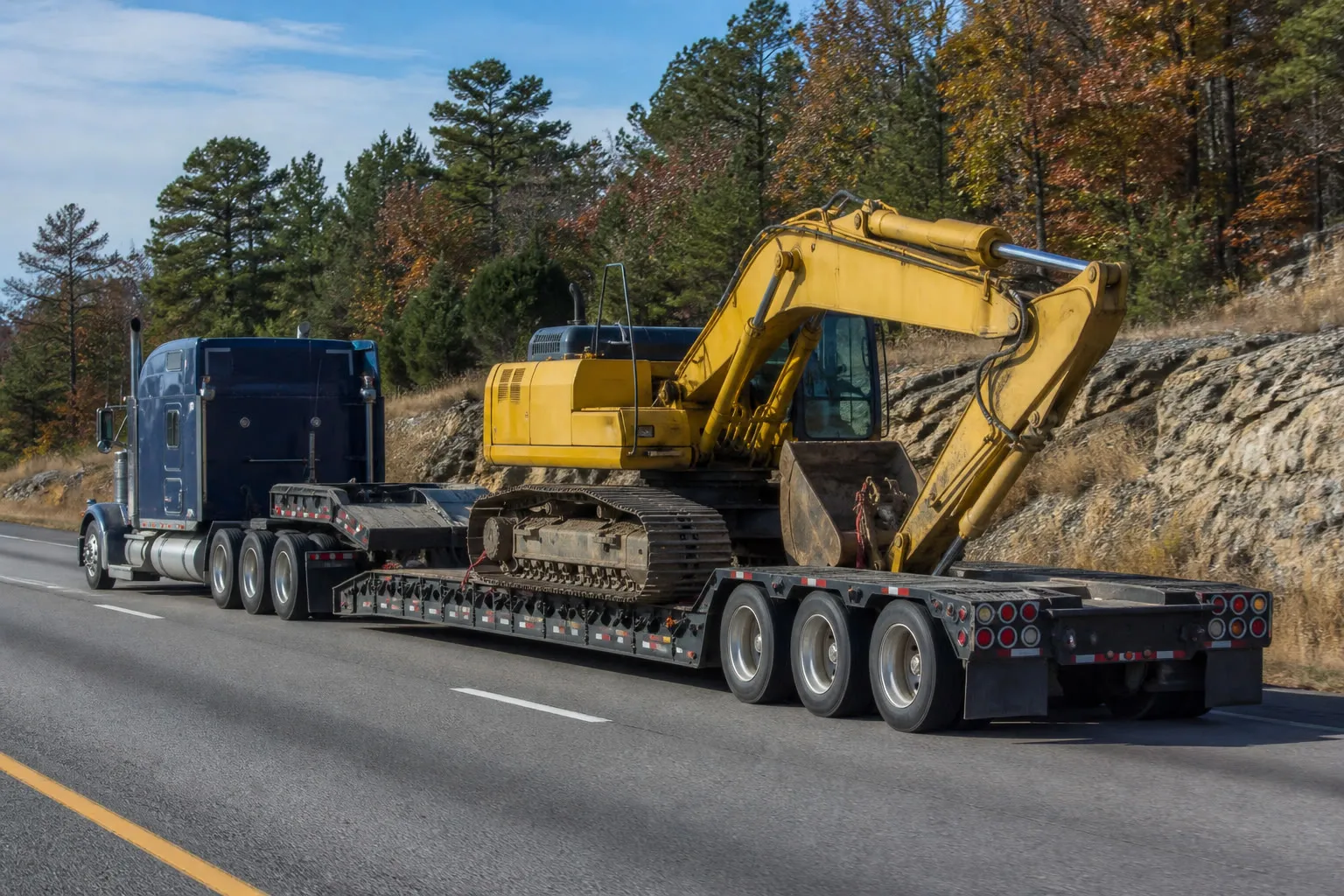
A height pole is a tall, flexible rod mounted on the lead escort vehicle and set just above the top of the load. Florida’s rule requires it to be made of non-conductive, non-destructive material and set at least 6 inches above the height of the load being escorted. The escort with the pole must run far enough ahead that the truck can take evasive action if the pole hits something.
When the pole strikes a low sign, wire, or beam, the escort radios the driver before the load gets there. It’s a last check, not a substitute for route planning. Our pilot car Guide covers width and length escort triggers. Height poles are the part of that job that shippers most often don’t know they’re paying for.
Route surveys and utility lines
Above a certain height, nobody trusts the map. Posted bridge clearances can change after a road gets repaved, and overhead wires and traffic signals often aren’t posted at all. That’s why Florida requires an affidavit for loads over 18 feet confirming the route clears the load plus six inches, and why Texas requires the applicant to physically inspect the route at 19 feet and up.
A route survey usually means a crew drives the route ahead of the move with a measuring pole or laser. They note every overpass, sign bridge, signal, and wire crossing, and they flag spots where the load needs a detour, a lane shift, or a utility crew to lift or de-energize lines. Utility work has to be scheduled with each utility, so it’s often the slowest part of a tall move. Build that lead time into your ship date.
Ways to keep a load under the next threshold
Every height band you avoid saves escorts, survey time, and restricted travel hours. These are the levers that usually matter most:
- Pick a lower deck. A step deck or a removable gooseneck (RGN) carries cargo lower than a standard flatbed, and a lowboy lower still. Our RGN vs step-deck comparison explains the trade-offs.
- Lower the machine itself. Booms, buckets, cabs, ROPS frames, exhaust stacks, and antennas can often be lowered, folded, or removed. Ask the manufacturer what can safely come off.
- Ship tall components separately. If a part can come off, it may need to travel on its own; states generally issue permits only for loads that can’t reasonably be broken down.
- Watch tire pressure and suspension. Air-ride trailers and inflated tires change the loaded height a little. Measure the load the way it will actually travel.
Measuring height for a permit
Permit offices want the overall height of the vehicle and load together, measured from the road surface to the highest point. A machine’s spec-sheet height isn’t enough, because the trailer deck adds to it. Give your broker both numbers: the machine height and the planned trailer type, so the deck height can be added correctly. Our step-by-step Guide on how to measure an oversize load for a permit quote walks through height, width, length, and overhang.
Round up, not down. A permit written for 15 feet 10 inches that turns out to be 16 feet 1 inch lands in a different Florida band, with different escort and travel rules. A wrong height can void the permit at a scale or an inspection.
Travel hours, signs, and lights for tall loads
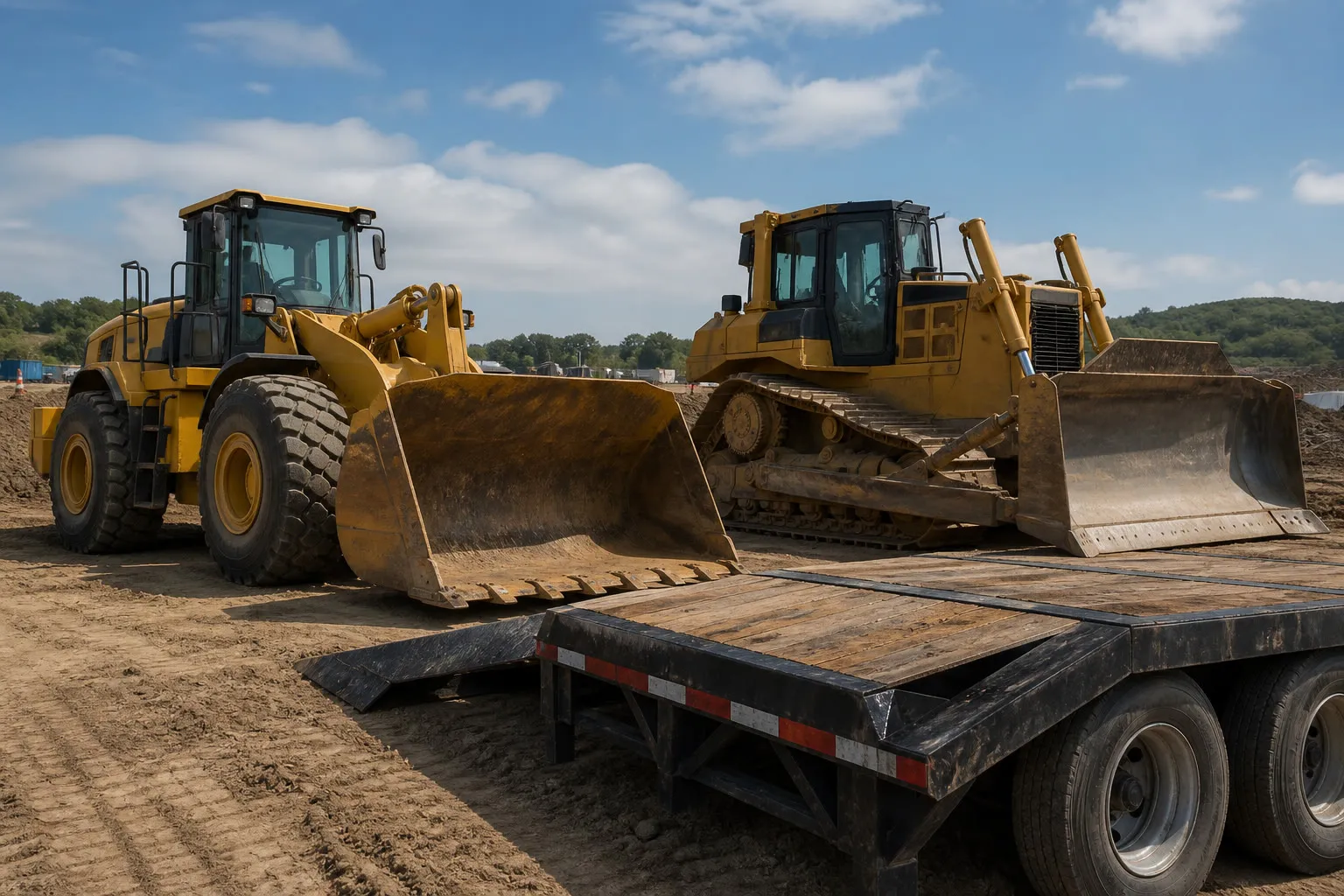
Taller loads usually travel under tighter rules. In Florida, loads over 14 feet 6 inches move in daytime only, not on holidays, and need flags, “OVERSIZE LOAD” signs, and warning lights. Florida requires amber warning lights on loads over 14 feet 6 inches tall and requires at least two lights on loads in the over-height bands, one on the front and one on the rear. Our Guides on oversize signs, flags, and lighting and daylight and holiday travel restrictions go deeper on both.
Over-height planning checklist
- Measure the overall loaded height from the road, on the trailer you plan to use.
- List the legal height for every state on the route; the lowest one sets the baseline.
- Check which height band the load falls into in each state, and whether a lower trailer drops it a band.
- Find out what can be lowered or removed from the machine before loading.
- Budget for a height pole escort where required, and for a front and rear escort at higher bands.
- For very tall loads, plan time for a route survey, a written clearance affidavit or inspection, and utility crews.
- Confirm daylight-only and holiday restrictions so the schedule is realistic.
Height also adds cost in ways that aren’t obvious at first. Escorts, surveys, and slower routes all show up on the bill; our heavy haul cost factors page breaks down what moves the price.
Get an over-height load quoted right
Logi Transports LLC (Sebastian, FL, MC-1636889, USDOT 4230991) arranges oversize and overweight moves nationwide, including permits and escorts for tall loads. Send the machine’s dimensions, its weight, and pickup and delivery locations. Call (864) 791-5644, email quotes@logitransports.com, or request a quote online. You can also read how to get an oversize quote to see what details speed things up.
This Guide summarizes Florida and Texas rules and FHWA guidance for planning purposes. Height limits and permit conditions vary by state and change over time; your permit, not this article, governs each move.