Federal Bridge Formula & Axle Weight Limits for Overweight Loads
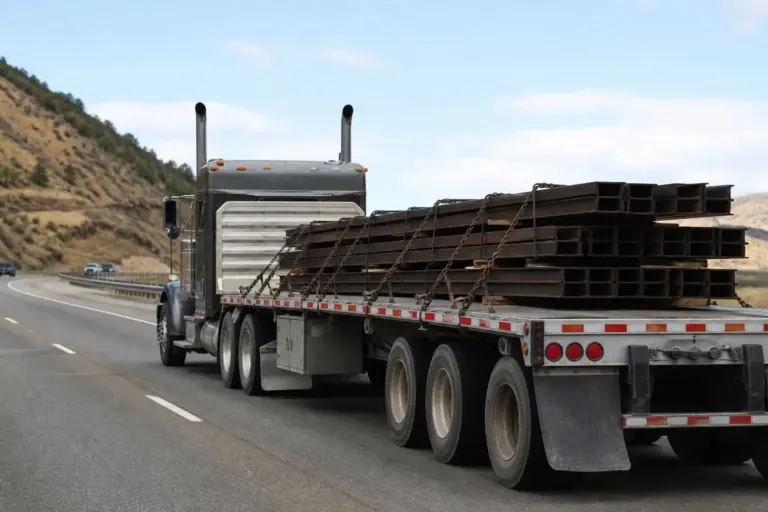
Most oversize questions start with a tape measure. Overweight questions start with axles. A load can be well under 80,000 pounds and still get flagged at a scale because too much weight sits on too few axles, packed too close together. That’s what the federal bridge formula and the axle weight limits are built to catch. If you ship heavy machinery, transformers, or steel, knowing how axle weights work tells you early whether a load is legal, needs a routine overweight permit, or is heading toward superload territory.
This Guide walks through the federal numbers, how the bridge formula works, why trailer choice changes the math, and what to send your broker so the permit gets written right the first time.
The four federal weight limits on the Interstate
Under 23 CFR 658.17 and FHWA’s Commercial Vehicle Size and Weight Program, a legal (non-permitted) truck on the Interstate System has to meet all four of these at the same time:
| Limit | Federal maximum | What it covers |
|---|---|---|
| Single axle | 20,000 lb | One axle, or axles whose centers are 40 inches apart or less |
| Tandem axle | 34,000 lb | Two or more consecutive axles spaced more than 40 and not more than 96 inches apart |
| Gross vehicle weight | 80,000 lb | Truck, trailer, and load combined |
| Bridge formula | Varies | Any group of two or more consecutive axles, based on count and spacing |
Off the Interstate, states set their own weight standards, and some states kept higher “grandfathered” limits from before the federal rules were adopted. That’s one reason the same truck can be legal in one state and overweight in the next.
How the bridge formula works
Congress added the bridge formula in 1975 to protect bridges. A short, heavy truck concentrates its weight on a small section of a bridge span, while a longer truck with the same weight spreads it out. The formula ties allowable weight to how many axles you have and how far apart they are. FHWA’s Bridge Formula Weights pamphlet gives it as:
W = 500 × [ (L × N) ÷ (N − 1) + 12N + 36 ]
- W is the maximum weight in pounds on the axle group, rounded to the nearest 500 lb.
- L is the distance in feet between the outer axles of the group.
- N is the number of axles in the group.
The key detail people miss: the formula applies to every group of two or more consecutive axles, not just the whole truck. FHWA describes three checks on a typical five-axle rig: the “outer bridge” (all axles, steer to the last trailer axle), the “tractor bridge” (axles 1 through 3), and the “trailer bridge” (axles 2 through 5). Pass the gross check and fail an interior group, and the truck is still overweight.
Worked examples using the formula
These numbers come straight from plugging values into the formula above. They’re for planning only; the federal single, tandem, and 80,000 lb caps still apply on top of them.
| Axles in group (N) | Outer-axle spread (L) | Formula weight (W) | Takeaway |
|---|---|---|---|
| 2 | 8 ft (about 97 in) | 38,000 lb | Just past tandem spacing, the 34,000 lb tandem cap no longer applies |
| 3 | 8 ft | 42,000 lb | A tight tridem gains little over a tandem |
| 4 | 20 ft | 55,500 lb | Spreading axles adds capacity fast |
| 5 | 40 ft | 73,000 lb | A short five-axle rig can’t legally reach 80,000 |
| 5 | 51 ft | 80,000 lb | The classic spread where a five-axle combo hits the gross cap |
FHWA’s own pamphlet uses the first two rows as its example: at 97 inches apart, two axles may carry 38,000 lb and three axles may carry 42,000 lb. The last row is why so many tractor-trailers are spec’d with roughly 51 feet between the steer axle and the rear trailer axle.
When a load goes overweight, and what a permit changes
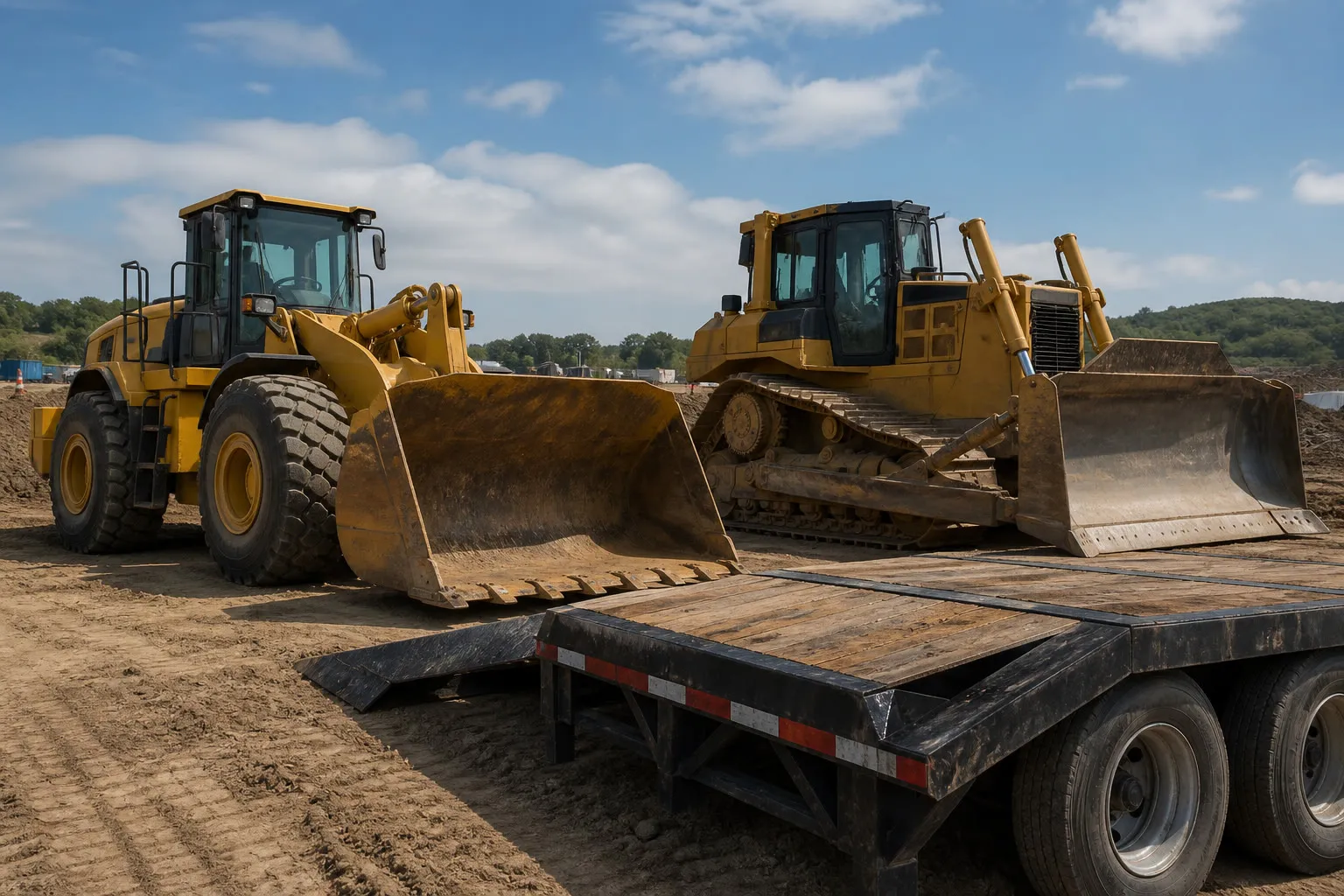
Federal rules let states issue special permits “without regard to the axle, gross, or Federal Bridge Formula requirements” for nondivisible vehicles or loads (23 CFR 658.17(h)). That’s the legal basis for every overweight permit you’ve seen on a dozer or a transformer move.
Nondivisible has a specific meaning in 23 CFR 658.5. A load qualifies if splitting it would:
- make the item unable to perform its intended function,
- destroy its value or make it unusable for its purpose, or
- take more than 8 workhours to dismantle with appropriate equipment.
The applicant carries the burden of proof on dismantling time. In practice, that means two common mistakes get permits denied or trucks written up at scales:
- Hauling extras with a permitted machine. A loose bucket, counterweight, or attachment that comes off in less than a day can make the load divisible. Many shippers ship those pieces on a separate truck to keep the main load permit-eligible.
- Stacking two legal items. Two machines that are each legal on their own don’t become one nondivisible load just because they fit on one trailer.
Once a load is permitted, the federal 20,000 / 34,000 / 80,000 numbers stop being the ceiling, but each state sets its own permitted axle and gross weights, and they vary. Every state on the route has to approve the configuration, so the most restrictive state usually sets the axle plan. If you’re running the same equipment often, compare single-trip vs. annual permits, since annual permits often carry their own weight caps.
Why trailer choice decides your axle weights
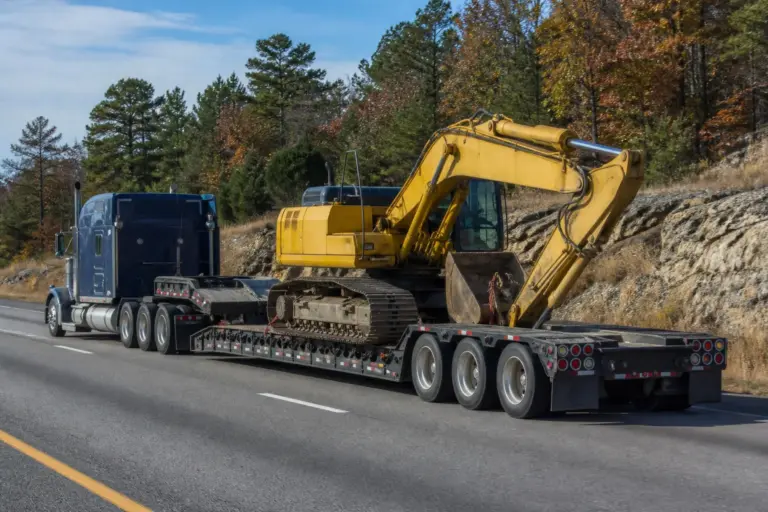
Because the formula rewards more axles and more spread, overweight hauling is really a trailer-selection problem. The same 60,000 lb excavator can be a routine move or a headache depending on what it rides on.
- More axles under the load. Multi-axle lowboys add trailer axles so each one carries less. Our RGN vs. step-deck comparison covers why RGNs are the default for tall, heavy machines.
- Flip axles and boosters. A flip axle (or booster) hinges onto the back of a trailer to add an axle and lengthen the group, which can raise the allowable weight on the rear group.
- Jeeps and stingers. A jeep dolly under the gooseneck adds axles in front of the trailer. Stinger-steered and beam trailers spread very heavy loads over long distances between axle groups; these are usually superload setups.
- Load position. Sliding a machine a few feet forward or back on the deck shifts weight between the tractor drives and the trailer group. A good driver places the load to balance groups, not just to fit the deck.
Each added axle adds trailer cost and sometimes length, which can trigger its own length permit or escort needs. That trade-off is a big part of heavy haul cost.
Overweight vs. oversize: they’re separate checks
A load can be oversize, overweight, both, or neither. Width, height, and length trigger the signs, flags, and lights and the pilot car rules. Weight triggers routing, bridge reviews, and sometimes engineering analysis. Heavier permitted loads are often limited to specific routes that avoid weak or posted bridges, and the routes a heavy load gets can be longer than the shortest path. Seasonal restrictions and travel-time blackouts stack on top of all of this.
What to send your broker for an overweight quote
Permit offices write axle weights onto the permit, so guesses cause problems at the scale. Before you request a quote, gather:
- Operating weight of the machine as it will ship, from the spec sheet or a scale ticket, with attachments listed separately.
- Dimensions: length, width, and height (see our guide to measuring an oversize load).
- What comes off: buckets, blades, counterweights, booms, and how long each takes to remove.
- Footprint: track or tire contact length, which affects where the load can sit on the deck.
- Pickup and delivery addresses plus any site limits (soft ground, low wires, tight gates).
- Ship window, since overweight permits and route surveys can take longer than a standard oversize permit.
With that, the carrier can pick a trailer, estimate axle group weights, and file permits in each state on the route. Our oversize quote guide and the Permits & Escorts page explain how that process runs.
Quick axle-weight checklist
- Is the gross over 80,000 lb? If yes, you need an overweight permit for a nondivisible load.
- Under 80,000 lb but a heavy, compact item? Check single (20,000 lb), tandem (34,000 lb), and each axle group against the bridge formula.
- Can anything come off in under 8 workhours? If so, plan to ship it separately.
- Does every state on the route accept the axle configuration? The strictest state sets the plan.
- Will extra axles push length past a permit or escort threshold?
Get an overweight load planned right
Logi Transports LLC (Sebastian, FL, MC-1636889, USDOT 4230991) matches overweight and oversize/overweight freight with carriers who run the right axle setups, and handles heavy equipment hauling nationwide. Call (864) 791-5644, email quotes@logitransports.com, or request a quote online with your machine’s weight and dimensions.
This Guide summarizes federal rules for planning purposes. State permit limits vary and change; your permit, not this article, governs each move.