Oversize Load Length Limits: Overhang, Overlength Permits & Escorts
Long loads rarely look dramatic from the shipper’s dock. A bundle of steel beams, a precast girder, a wind blade section, or a long tank may sit inside legal width and height and still need a permit, escorts, and a daytime-only travel plan because of one number: overall length. Overhang, the part of the load sticking past the front or rear of the trailer, adds a second set of rules on top of that. Getting the oversize load length limit right for every state on the route keeps a quote from changing on pickup day.
This Guide covers how federal length rules work, how Florida and Texas handle overlength permits and overhang, when escorts are required for length alone, and what to measure before you ask for a price. It pairs with our Guides on oversize load width limits and oversize load height limits.
How length limits work: trailer length vs. overall length
Length rules are less intuitive than width or height because the federal government regulates trailer length rather than overall length for most truck combinations. Under 23 CFR 658.13, on the National Network no state may set a limit of less than 48 feet on a semitrailer in a tractor-semitrailer combination, or less than 28 feet on each trailer in a twin combination. The same rule says no state may impose an overall length limit on those two combination types.
That is why a legal tractor with a 48 or 53 foot trailer can run without an overall length cap, while a load that hangs well past the deck, or a trailer stretched to carry it, triggers an overlength permit. Each state then sets its own trailer length, overhang limits, and permit bands for anything beyond that.
Specialized equipment has its own federal floors
23 CFR 658.13 also sets minimums for specialized equipment. Traditional automobile and boat transporters get at least 65 feet overall and stinger-steered versions at least 75 feet, measured exclusive of overhang, and states may not set front overhang limits below 3 feet or rear overhang below 4 feet for those carriers. A stinger-steered unit has its fifth wheel on a drop frame behind and below the tractor’s rear axle, which is how it gains extra length while still turning.
Florida length and overhang rules
Florida Statute 316.515 sets Florida’s legal baseline. A semitrailer in a tractor-semitrailer combination may not exceed 48 feet including the load, unless it is a trailer more than 48 but not more than 57 feet with a kingpin-to-rear-axle distance of no more than 41 feet and rear underride protection. A straight truck is limited to 40 feet, and a straight truck and trailer combination to 68 feet including the load. On the front, the load on a single vehicle or the lead vehicle of a combination may not extend more than 3 feet past the front wheels or front bumper.
Once a load goes past legal length, Florida Administrative Code Rule 14-26.012 sets the permit conditions. It splits moves at 80 feet overall:
- Up to 80 feet: trip or multi-trip permits, movement all days and all hours. Rear overhang is limited to 10 feet at night unless the permit says otherwise. When rear overhang exceeds 4 feet, a warning light is required on top of the vehicle, plus two red lamps and two red reflectors on each side at the extreme rear of the load.
- Over 80 feet: daytime hours only, no holidays. Flags, warning signs, and at least two warning lights (one front, one rear of the load) are required.
- Over 85 feet: no movement in congested areas during peak traffic hours unless the permit authorizes it.
- Over 95 feet: one qualified escort.
- Over 150 feet: two qualified escorts, or one on a limited access highway.
- Over 250 feet: one law enforcement escort plus one qualified escort.
Florida’s rule also says that when a load is over length only, the escort rides at the rear of the load at all times. Tractor-semitrailers with three points of articulation are allowed up to 105 feet without an escort.
Self-propelled equipment and front overhang in Florida
Cranes and other self-propelled units have separate rules under Florida Administrative Code Rule 14-26.012. The boom must be fully retracted. Up to 80 feet total length, front overhang over 3 feet and up to 9 feet can move all days and hours, while front overhang over 9 feet is daytime only. Both need a warning light at the tip of the projection. Night movement requires at least 80 inches of clearance under the front overhang.
Texas length and overhang rules
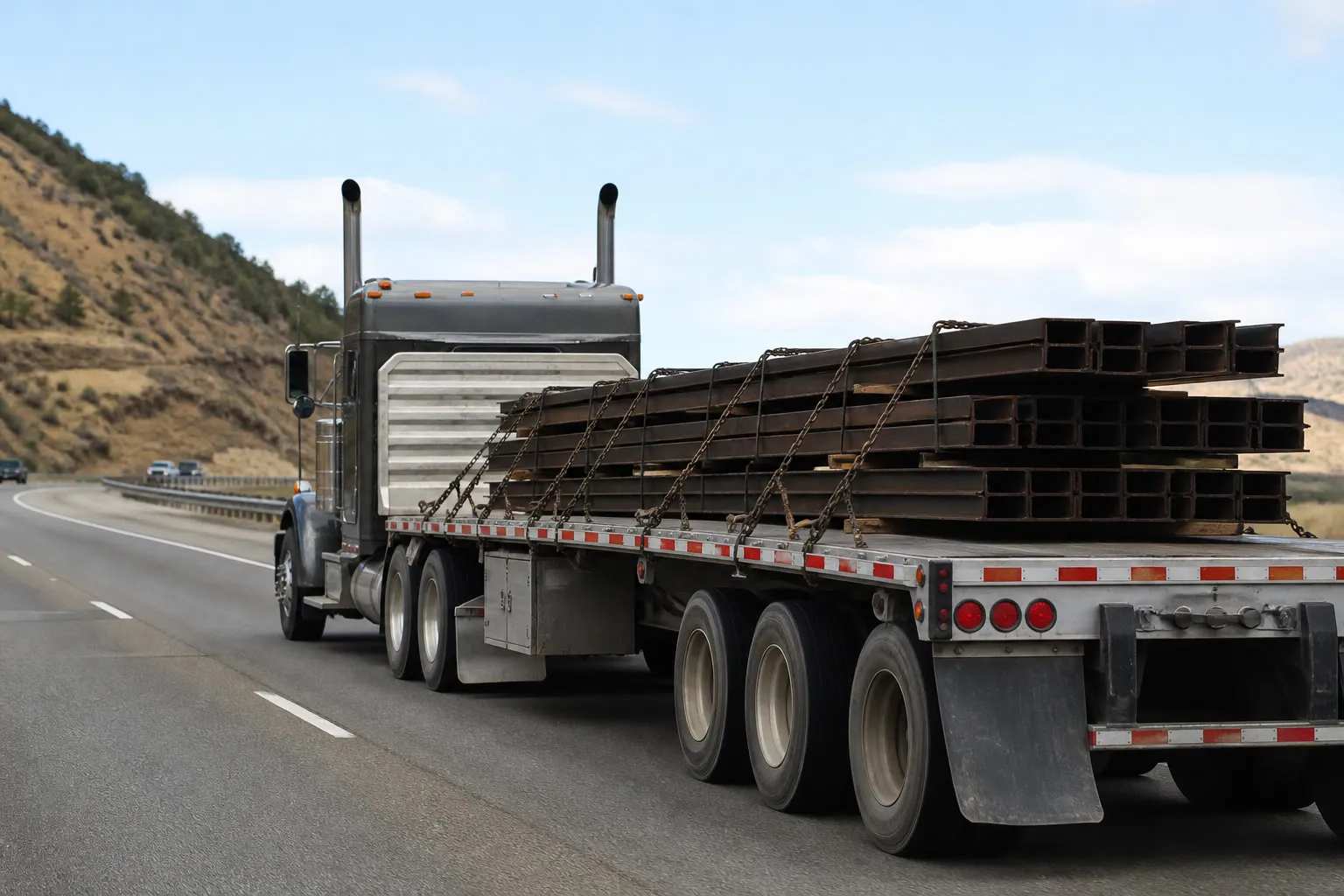
Texas uses a longer legal semitrailer. Under Texas Transportation Code 621.204, a semitrailer in a tractor-semitrailer combination may be up to 59 feet, excluding the towing device, and each trailer in a double up to 28 1/2 feet. A single motor vehicle other than a truck-tractor is capped at 45 feet. Texas Transportation Code 621.206 says a load may not extend more than 3 feet past the front or, except as other law allows, more than 4 feet past the rear.
For permitted loads, 43 Texas Administrative Code 219.11 adds these overlength conditions:
- Maximum permit length for a single vehicle is 75 feet.
- No permit for more than 25 feet of front overhang or more than 30 feet of rear overhang, unless TxDOT grants an exception based on a route and traffic study.
- A load extending more than 20 feet beyond the front or rear of the load-carrying surface needs a rear escort flag vehicle.
- Over 110 feet and up to 125 feet overall: a front escort on two-lane roads, or a rear escort on multi-lane highways.
- Over 125 feet overall: front and rear escorts at all times, and the applicant gets a proposed route that must be physically inspected unless TxDOT grants an exception.
- Night travel is limited to interstate moves not over 10 feet wide and 100 feet long with legal overhang, unless an exception is granted.
Texas also treats a permanently mounted boom on a single vehicle, such as a motor crane, as part of the vehicle rather than overhang. If that vehicle exceeds 45 feet, a permit will not be issued when the boom projects more than 25 feet past the front bumper or 30 feet past the rear bumper, unless an exception is granted.
Florida vs. Texas length thresholds at a glance
| Item | Florida | Texas |
|---|---|---|
| Legal semitrailer length | 48 ft (up to 57 ft with 41 ft kingpin limit) | 59 ft, excluding towing device |
| Front load extension | 3 ft past front wheels or bumper | 3 ft past the front |
| Rear overhang trigger | Over 4 ft: top warning light plus red lamps and reflectors (permitted loads) | Over 4 ft needs other legal authority, such as a permit |
| Maximum overhang on a permit | Rear limited to 10 ft at night unless the permit says otherwise | 25 ft front / 30 ft rear without a TxDOT exception |
| First length-only escort | Over 95 ft: one escort, at the rear | Over 110 ft (front on two-lane, rear on multi-lane), or over 20 ft of overhang |
| Two escorts | Over 150 ft (one on limited access) | Over 125 ft |
| Daytime-only band | Over 80 ft | Permitted oversize moves, except interstate loads up to 10 ft wide and 100 ft long with legal overhang |
Numbers come from Florida Statute 316.515, Florida Administrative Code Rule 14-26.012, Texas Transportation Code 621.204, Texas Transportation Code 621.206, and 43 Texas Administrative Code 219.11. Other states on your route set their own limits, so each state permit is checked separately.
Flags and lights for overhang
Federal safety rules apply on top of state permits. 49 CFR 393.87 requires red or orange fluorescent flags at least 18 inches square on any load extending more than 4 feet beyond the rear or more than 4 inches beyond the sides. One flag is used at the extreme rear if the projection is 2 feet wide or less, and two if it is wider. Florida’s permit rule also calls for 18 by 18 inch flags at the ends of all projections and overhangs, and OVERSIZE LOAD signs once a load exceeds 80 feet in length. Our Guide to oversize load signs, flags, and lighting covers the full setup.
Choosing equipment to manage length
Trailer choice decides how much of a long load counts as overhang. A longer deck or an extendable trailer can carry a beam with less overhang, which can keep it under Texas’s 20 foot overhang escort trigger or Florida’s 10 foot night rear overhang limit, even though overall length goes up. Steerable trailers and stinger-type setups help long combinations make turns that a fixed trailer can’t. Our RGN vs. step deck comparison explains how deck length and well length affect what fits.

Overlength planning checklist
- Measure overall length from the front bumper of the truck to the rearmost point of the load, plus front and rear overhang separately.
- Note where overhang starts: from the front bumper or front wheels, and from the end of the load-carrying surface.
- Check each state on the route for trailer length, overhang limits, and its length escort bands.
- Decide whether a longer or extendable trailer cuts overhang enough to drop an escort or night restriction.
- Plan flags, lights, and OVERSIZE LOAD signs for the overhang and length involved.
- Expect daytime-only travel and peak-hour limits above the state bands, and build that into delivery dates.
- For very long moves, allow time for route surveys or inspections before the permit is issued.
Our Guide on how to measure an oversize load for a permit quote shows how to take these numbers, and when you need a pilot car explains how escort requirements stack when a load is long and wide. For timing, see oversize load travel restrictions. Length also feeds into price, as shown on our heavy haul cost factors page.
Get a long load quoted right
Logi Transports LLC (Sebastian, FL, MC-1636889, USDOT 4230991) arranges oversize and overweight moves nationwide, including permits and escorts for overlength loads. Send the load’s length, overhang, width, height, weight, and pickup and delivery points. Call (864) 791-5644, email quotes@logitransports.com, or request a quote online. You can also see what details speed up an oversize quote.
This Guide summarizes federal length rules and Florida and Texas permit criteria for planning purposes. Length limits and permit conditions vary by state and change over time; your permit, not this article, governs each move.